 Meridian Labels
Meridian achieves BS5609 approval for marine-grade labelling

Three-section certification on two synthetic face stocks, opening up chemical and offshore work that previously had to be sent abroad.
BS5609 is the standard that governs labels applied to containers shipped by sea. To pass, a label has to survive three months in salt water and still be legible, and the print itself has to resist abrasion and UV afterwards. It is the difference between being able to quote for chemical drum labelling and not.
Certification is in three sections. Sections 1 and 2 cover the face stock and adhesive, which the material manufacturer certifies. Section 3 covers the printing process and has to be certified for each printer, each ink set and each face stock combination — which is the part that takes time.
We now hold Section 3 approval on two polyester face stocks across our UV flexo line. In practical terms it means a chemical manufacturer in the Midlands no longer has to send drum labelling to a specialist in the Netherlands, which had been adding about three weeks to their lead time.
Also written
Each of these describes something that cost us money or changed how we quote.

Why we lowered our minimum order to 250 labels
It costs us more per label and it is the best decision we made last year. Here is the reasoning, including the part that is not altruistic.
Read the piece →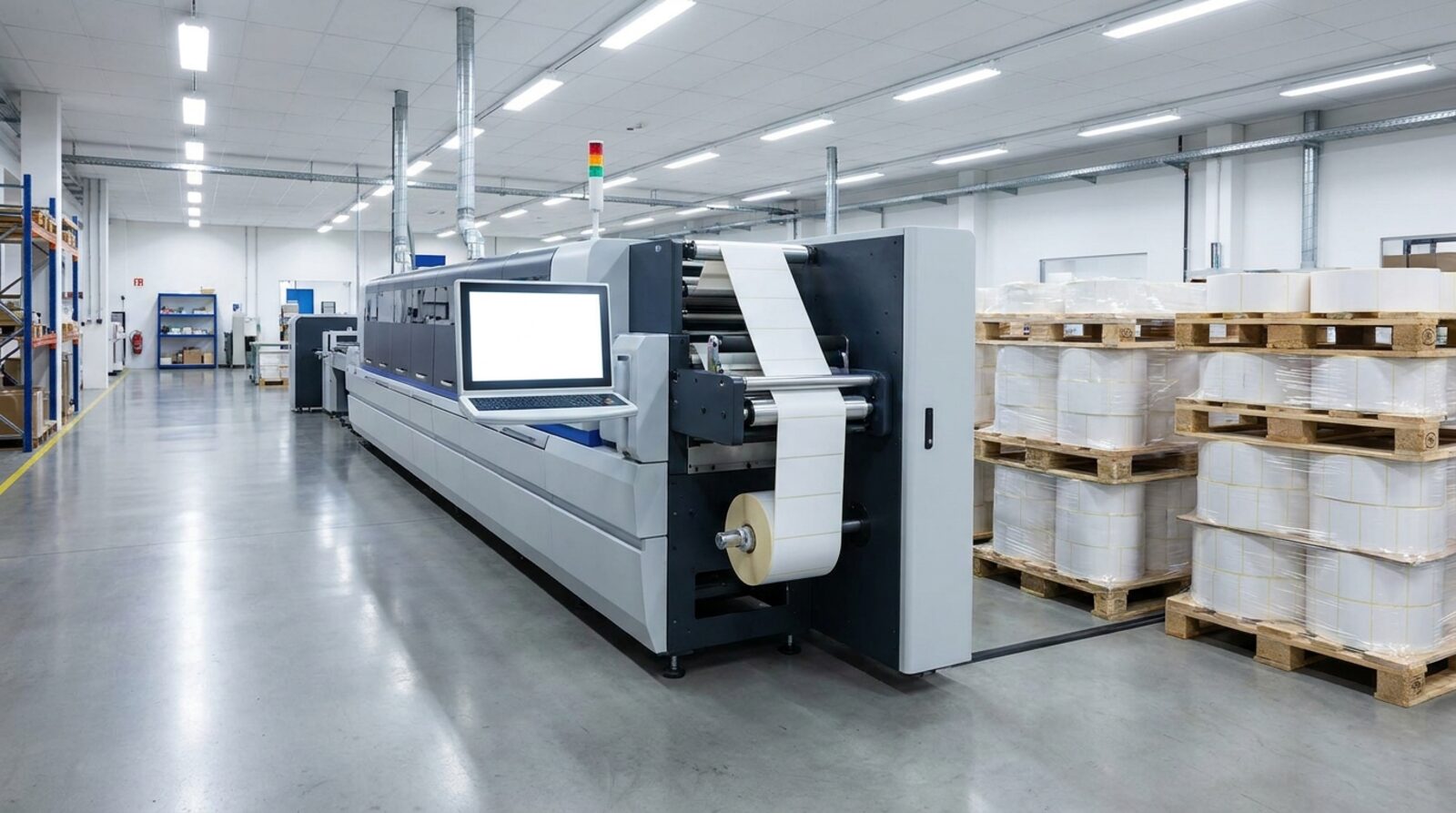
FSC Chain of Custody certification confirmed for a fourth year
Plus the numbers behind it: liner recycling, matrix waste and where our paper actually comes from.
Read the piece →Send the artwork and tell us the substrate
We pre-flight before we quote, not after we schedule. About one file in six comes back with something to fix, and week one is the cheap time to find it.